
Learn how IPTV for Smart TV works, what you need, compatible devices, features, pricing, setup tips, alternatives, and how to choose a service.
🚀 Start Your Free IPTV Trial->
IPTV for Smart TV: Complete Guide for 2026
Introduction
Watching television has changed significantly. Instead of relying only on traditional cable or satellite connections, viewers can use internet-based services to access live channels, on-demand video, movies, sports, news, and other entertainment.
IPTV for Smart TV refers to watching television content delivered through an internet connection on a compatible Smart TV or through a streaming device connected to the television.
For learners, freelancers, startups, and small business owners, Smart TV streaming can be useful because it can reduce hardware complexity and provide flexible access to entertainment and information. However, the important distinction is that an IPTV app/player and an IPTV content provider are not necessarily the same thing. A player can organize and play streams, while a provider may supply the actual content or access.
This guide explains how IPTV works on Smart TVs, what features to check, compatible platforms, pricing considerations, setup basics, alternatives, and important questions to ask before subscribing.
Important: IPTV technology itself is not automatically legal or illegal. Legality depends on the content, provider, licensing, and applicable laws in your country. Always verify that a service has appropriate rights to distribute the content it offers.
What Is IPTV for Smart TV?
IPTV for Smart TV is television content delivered over an IP-based internet connection and viewed through a Smart TV application, compatible IPTV player, or supported streaming device.
Unlike traditional broadcasting, IPTV uses internet networking to deliver video data.
How IPTV Works
A typical setup includes four components:
Component: IPTV provider
Role: Supplies authorized content access or streams
Component: IPTV app/player
Role: Organizes and plays supplied streams
Component: Internet connection
Role: Delivers video data to the TV
Component: Smart TV/display
Role: Shows the content
The exact setup depends on the service.
For example, some legitimate streaming platforms provide their own application and content subscription. Other IPTV players may simply provide playback functionality and require the user to supply a compatible playlist or service.
IPTV vs Traditional TV
Traditional cable and satellite services generally use dedicated distribution infrastructure. Internet television uses an internet connection and compatible software or hardware.
The biggest practical difference is flexibility: Smart TVs can often install streaming applications directly, eliminating the need for a separate box when the required application is supported.
Why IPTV for Smart TV Matters in 2026
Smart TV ecosystems continue to become more app-focused. Samsung, for example, provides an app marketplace where users can search for and install applications directly on compatible TVs. Samsung also notes that available apps and features can vary by model, software version, and region.
At the same time, major live-TV streaming services support a range of Smart TV platforms. YouTube TV, for example, lists support for select Samsung, LG, Hisense, Vizio, Fire TV Edition, and other Smart TV models.
This makes device compatibility one of the first things to check before choosing a service.
A service that works perfectly on one television may not be available on another because Smart TVs use different operating systems, app stores, hardware generations, and regional catalogs.
Key Benefits of IPTV on Smart TV
1. Large-Screen Viewing
A Smart TV provides a larger display than a smartphone, tablet, or laptop, making live television, movies, educational content, and news more comfortable to watch.
2. Fewer External Devices
If the required application is available directly through the TV's app store, you may not need an additional streaming box.
3. Flexible Content Access
Internet-based services can provide combinations of live television, on-demand programming, recorded content, and other digital media.
4. Easy App-Based Experience
Modern Smart TVs allow users to install, update, remove, and organize applications directly from the television. Samsung, for example, provides built-in tools for installing and managing TV applications.
5. Multiple Content Types
Depending on the service, users may find:
Live TV
News
Sports
Movies
TV shows
Educational programming
Video on demand
Catch-up or replay features
Electronic program guides
Availability varies by provider, country, subscription, and licensing agreements.
6. Convenient Remote Control
Smart TV applications are designed for television interfaces, making navigation possible through a standard remote rather than requiring a computer.
Top Providers, Tools, and Services
There is no single IPTV service that works identically worldwide. Availability, pricing, channels, and device compatibility can change by country.
For a safer comparison, separate licensed live-TV services from generic IPTV players and unverified IPTV subscriptions.
YouTube TV
YouTube TV supports select Smart TVs and streaming devices, including Samsung and LG Smart TVs, according to its current device information. Its current listed main plan is $82.99/month, although promotional pricing may differ.
YouTube TV is primarily relevant to users in the United States, so international availability should be checked before considering it.
Hulu + Live TV
Hulu offers live TV alongside its streaming library and supports select Samsung, LG, Vizio, Android TV, Fire TV, Roku, Apple TV, and other devices. Hulu currently lists a three-day free trial for eligible users.
Availability is primarily U.S.-focused and can depend on location.
Sling TV
Sling TV supports various Smart TVs and streaming platforms, including select Samsung and LG televisions. Sling notes that older devices can become unsupported when manufacturers stop providing operating-system updates.
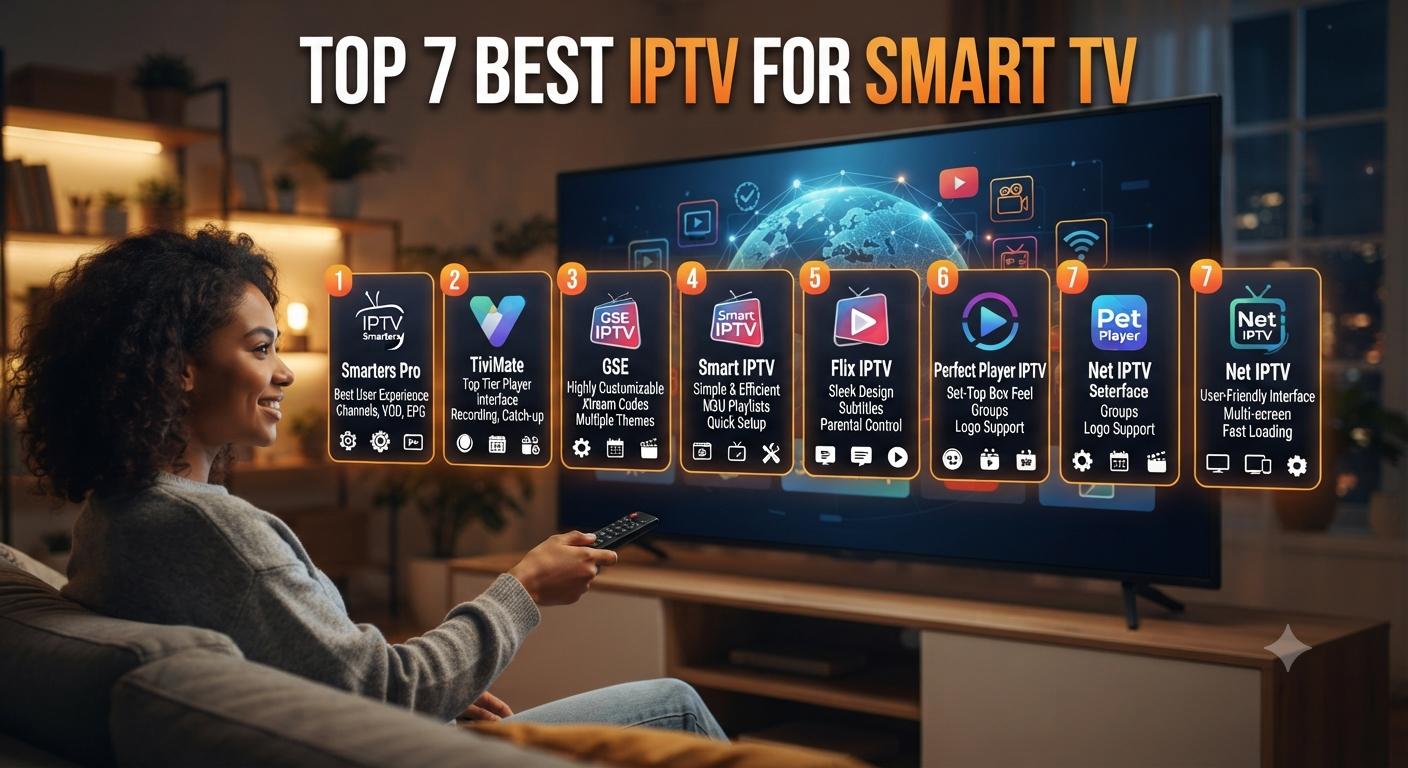
IPTV Players
An IPTV player is different from a content provider. A player may organize playlists and play compatible streams but may not supply television channels itself.
Before using any third-party player, verify:
Supported TV operating system
Playlist format
Provider compatibility
Privacy practices
Update history
Developer information
Content licensing from the service you use
IPTV for Smart TV Comparison Table
Service/Tool: YouTube TV
Smart TV Support: Select Smart TVs
Main Focus: Live TV, news, sports
Content Model: Subscription
Availability: Primarily U.S.
Service/Tool: Hulu + Live TV
Smart TV Support: Select Smart TVs
Main Focus: Live TV + streaming
Content Model: Subscription
Availability: Primarily U.S.
Service/Tool: Sling TV
Smart TV Support: Select Smart TVs
Main Focus: Live TV
Content Model: Subscription
Availability: Primarily U.S.
Service/Tool: IPTV Player
Smart TV Support: Depends on app
Main Focus: Stream playback
Content Model: User/provider supplied
Availability: Varies
Service/Tool: Unverified IPTV service
Smart TV Support: Varies
Main Focus: Claimed live/VOD access
Content Model: Verify independently
Availability: Varies
Always verify current compatibility, pricing, geographic availability, and licensing before publishing or purchasing.
Important Features to Look For
Choosing IPTV for Smart TV should involve more than looking at the number of advertised channels.
1. Smart TV Compatibility
Check the exact TV model and operating system.
Common Smart TV ecosystems include:
Samsung Tizen
LG webOS
Google TV
Android TV
Roku TV
Fire TV Edition
Vizio SmartCast
Compatibility can vary even within the same brand.
2. Electronic Program Guide
An EPG, or Electronic Program Guide, displays information about upcoming programming.
A useful EPG can make live-TV navigation easier by showing:
Channel names
Current program
Upcoming programs
Program times
Categories
3. Video on Demand
VOD allows users to select content rather than waiting for a scheduled broadcast.
If VOD matters to you, check whether the service clearly explains what content is included and whether it has appropriate distribution rights.
4. HD and 4K Support
Some services advertise HD, Full HD, or 4K. However, resolution depends on several factors, including:
Source quality
TV capability
Internet speed
Wi-Fi conditions
App support
Encoding
Provider infrastructure
A "4K" label alone does not guarantee every stream will play in native 4K.
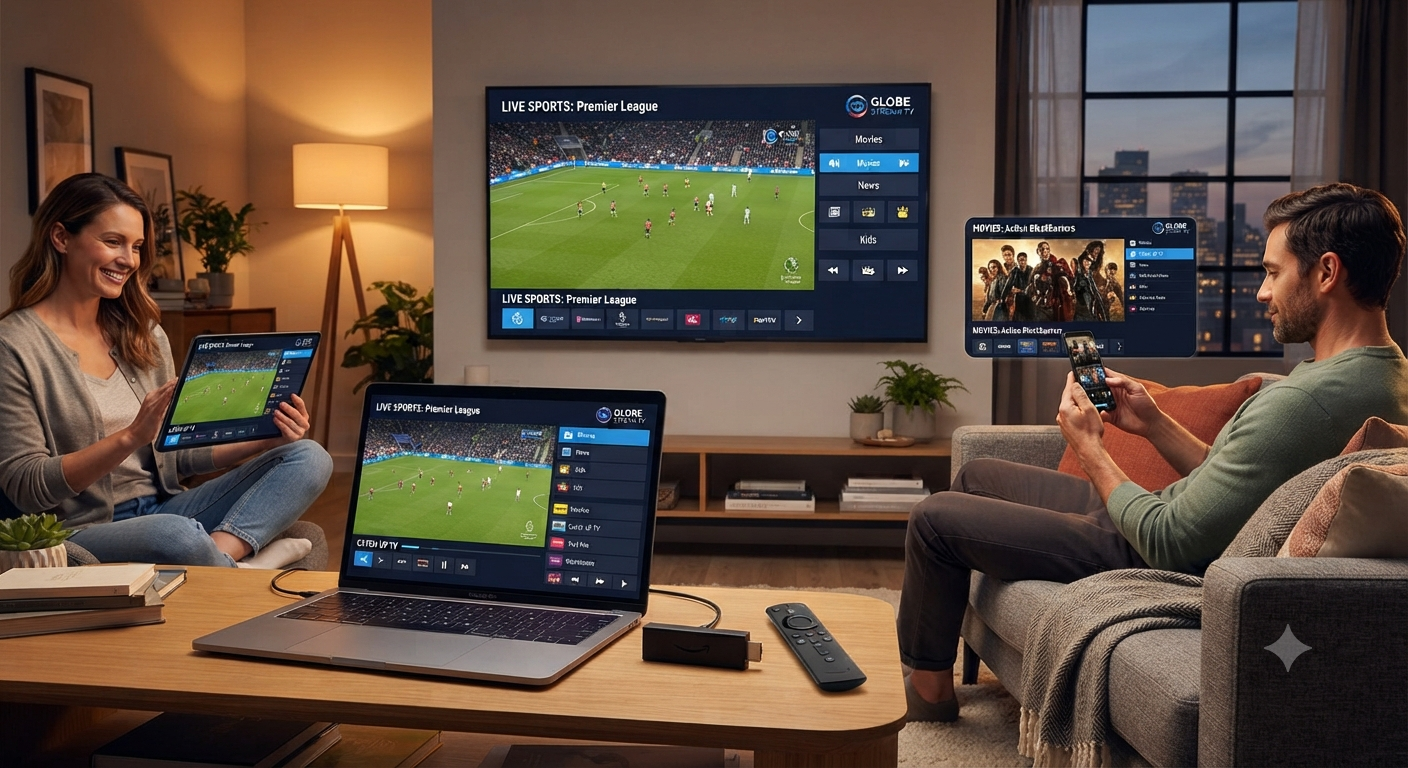
5. Multiple Devices
If your household or business uses multiple screens, check whether the subscription permits simultaneous viewing.
Do not assume that "works on multiple devices" means multiple simultaneous streams.
6. M3U/M3U8 Compatibility
Some IPTV players use playlist formats such as M3U or M3U8.
If you are using a player rather than an all-in-one streaming service, confirm which playlist formats it supports.
7. App Updates
Regular software updates can improve compatibility, security, and performance.
Samsung recommends keeping TV applications and TV software updated when troubleshooting app-related problems.
Internet Speed for IPTV
Internet performance is one of the most important factors in streaming quality.
These figures are planning estimates, not guarantees:
Video Quality: SD
Approximate Planning Speed: Around 5 Mbps
Video Quality: HD
Approximate Planning Speed: Around 10 Mbps
Video Quality: Full HD
Approximate Planning Speed: Around 15–20 Mbps
Video Quality: 4K UHD
Approximate Planning Speed: Around 30–50+ Mbps
Actual requirements vary based on compression, stream quality, network congestion, Wi-Fi performance, and the number of devices using the connection.
Wi-Fi vs Ethernet
If possible, Ethernet can provide a more consistent connection than a weak or congested Wi-Fi signal.
For Wi-Fi users:
Place the router appropriately.
Avoid unnecessary network congestion.
Keep TV software updated.
Test your connection when buffering occurs.
Consider the distance between router and TV.
IPTV for Smart TV Pricing Table
Pricing can change frequently and differs significantly by country and service.
Service Type: Licensed live-TV service
Example Pricing: Varies
What to Check: Current official price
Service Type: IPTV player
Example Pricing: Often varies
What to Check: App pricing and features
Service Type: Monthly IPTV subscription
Example Pricing: Provider dependent
What to Check: Rights, streams, refund terms
Service Type: Quarterly subscription
Example Pricing: Provider dependent
What to Check: Renewal terms
Service Type: Annual subscription
Example Pricing: Provider dependent
What to Check: Cancellation and renewal
Service Type: Free trial
Example Pricing: Provider dependent
What to Check: Trial duration and eligibility
For example, YouTube TV currently lists its main plan at $82.99/month, while Hulu + Live TV currently lists $89.99/month and a three-day free trial for eligible users. These are U.S.-specific examples and can change.
For any lesser-known IPTV provider, verify before publishing rather than relying on an unverified price, channel count, uptime claim, or review.
How to Set Up IPTV for Smart TV
The exact installation process depends on your TV and service.
Step 1: Check Your TV
Find the:
Brand
Model
Operating system
Software version
Region
Step 2: Check the App Store
Search your TV's application marketplace for the required service or player.
Samsung's current process, for example, involves opening the Apps section, searching for an application, selecting it, and choosing Install.
Step 3: Install the Official App
If the service provides an official Smart TV application, use the appropriate official app store whenever possible.
Step 4: Sign In
Enter your subscription credentials if required.
Step 5: Test Playback
Try:
Live channels
VOD
EPG
Different video qualities
Audio
Subtitles if available
Step 6: Optimize Your Network
If playback buffers, test the internet connection before assuming the service itself is responsible.
Common IPTV Smart TV Problems
Buffering
Possible causes include:
Weak Wi-Fi
Network congestion
Slow internet
Overloaded service infrastructure
High-resolution streams
TV or app problems
Change one variable at a time when troubleshooting so you can identify the actual cause.
One Channel Not Working
If other channels work normally, the problem may be specific to that stream rather than your entire internet connection.
EPG Is Incorrect
EPG information can become outdated or mismatched. Check whether the service provides an EPG refresh option.
App Crashes
Try:
Restarting the TV.
Updating the app.
Updating TV software.
Reinstalling the application.
Checking available storage.
Login Problems
Verify account credentials, subscription status, device limits, and whether the service allows your particular TV platform.
Best IPTV for Smart TV: Who Is It Best For?
Best for Learners
Smart TV streaming can be useful for educational videos, documentaries, news, language-learning content, and other large-screen material.
Best for Freelancers
Freelancers may benefit from flexible entertainment and information access after working hours, especially when their Smart TV already supports the required application.
Best for Startups
Startups should consider services that fit their budget and clearly define account and device policies.
Best for Small Business Owners
Businesses should pay particular attention to commercial licensing. A consumer subscription should not automatically be assumed to permit public or commercial display.
Best for Families
Families should consider:
Multiple streams
Parental controls
User profiles
Content categories
Device compatibility
Pros and Cons
Pros
Large-screen viewing
Internet-based delivery
Convenient app experience
Potentially fewer external devices
Access to live and on-demand content
Flexible service options
Smart TV integration
Cons
Requires a reliable internet connection
App compatibility varies
Older TVs may lose support
Content availability differs by country
Third-party IPTV services require careful verification
Some services may limit simultaneous streams
4K availability is not guaranteed for every program
Best Alternatives to IPTV on Smart TV
If a particular IPTV solution is unsuitable, consider mainstream streaming alternatives.
Traditional Cable or Satellite
Useful for households that prefer conventional television distribution and bundled services.
Live-TV Streaming Services
Services such as YouTube TV, Hulu + Live TV, and Sling TV offer internet-based live television with supported applications and documented device compatibility.
On-Demand Streaming
Subscription video-on-demand platforms can be more suitable if you rarely watch scheduled live television.
Free Ad-Supported Streaming
Free, ad-supported services can be an alternative for viewers who prioritize cost over having a specific channel lineup.
Future Trends in IPTV for Smart TV
The Smart TV ecosystem is likely to continue moving toward integrated software experiences.
Important trends to watch include:
Better Personalization
Recommendation systems can increasingly organize content around viewing habits.
Higher-Resolution Streaming
4K adoption continues to influence streaming hardware and content delivery, although actual availability remains service dependent.
Improved Smart TV Platforms
TV manufacturers continue updating operating systems, app stores, interfaces, and performance.
More Cross-Device Viewing
Users increasingly expect subscriptions to work across TVs, phones, tablets, computers, and streaming devices where supported.
Stronger Content Verification
As internet television grows, consumers should pay greater attention to licensing, transparent billing, privacy, and provider legitimacy rather than relying only on large channel-count claims.
Before You Choose an IPTV Service
Use this checklist:
Is my Smart TV officially supported?
Is the application available in my region?
Is the provider transparent about its service?
Are content rights or licensing clearly explained?
What is the current price?
Are there renewal or auto-renewal terms?
How many simultaneous streams are allowed?
Does it support HD or 4K where advertised?
Is EPG included?
Is VOD included?
Does it support my preferred devices?
Is customer support available?
What are the cancellation/refund rules?
Conclusion
IPTV for Smart TV provides a convenient way to access internet-delivered television and video content on a large screen. The experience can be simple when your TV supports the required application, your internet connection is reliable, and the service clearly explains its content, pricing, device limits, and licensing.
The most important factor is not simply the number of channels advertised. Instead, evaluate Smart TV compatibility, content rights, streaming quality, EPG/VOD features, simultaneous streams, pricing, support, and cancellation terms.
For 2026, checking the exact TV model and official application availability should be one of your first steps. Smart TV support can differ by manufacturer, model, operating system, and region, so verify those details before subscribing.
FAQs
1. What is IPTV for Smart TV?
IPTV for Smart TV means watching internet-delivered television or video content through a compatible Smart TV application, IPTV player, or connected streaming device.
2. Can I use IPTV directly on a Smart TV?
Yes, if the required application is supported by your TV. Some services have official Smart TV apps, while other IPTV players may require compatible playlists or service credentials.
3. Does every Smart TV support IPTV?
No. Compatibility depends on the TV manufacturer, operating system, model, software version, region, and application.
4. Does IPTV require internet?
Yes. Internet-delivered IPTV requires an internet connection. Streaming quality depends on bandwidth, network stability, video quality, and other factors.
5. What internet speed is needed for 4K IPTV?
Around 30–50+ Mbps can be used as a general planning range for 4K streaming, but actual requirements vary by service, compression, network conditions, and simultaneous usage.
6. Can IPTV work on Samsung Smart TV?
Compatible applications can be installed on supported Samsung Smart TVs through the Samsung TV app ecosystem. However, individual IPTV applications may have different compatibility requirements.
7. Can IPTV work on LG Smart TV?
Some IPTV and live-TV services support select LG Smart TV models. Always check the specific application's current requirements before subscribing.
8. Is IPTV legal?
IPTV is a technology for delivering video over IP networks. Whether a particular service is lawful depends on the content rights, licensing, provider, and applicable laws in your location.
9. Is 4K IPTV always actually 4K?
No. A service may advertise 4K availability, but individual content can have different resolutions. Your TV, app, internet connection, and the source stream also affect playback quality.
10. What should I check before buying IPTV for Smart TV?
Check TV compatibility, official app availability, content licensing, pricing, simultaneous streams, EPG, VOD, video quality, support, renewal terms, and cancellation/refund policies.
11. Can I watch IPTV on multiple Smart TVs?
Some services allow multiple registered devices or simultaneous streams, but policies differ. Check the provider's current device and stream limits rather than assuming one subscription supports unlimited TVs.
12. What is the difference between an IPTV player and an IPTV provider?
An IPTV player is software used to organize and play compatible streams. An IPTV provider may supply the actual content or access. They are not necessarily the same service.




Write a comment ...