
Compare the key features, devices, pricing, speed, EPG, VOD, sports, legality, and buying factors before choosing the best IPTV service 2026.
👉 Find the Best IPTV Service 2026->
Best IPTV Service 2026: Complete Guide to Choosing the Right Service
Introduction
Finding the best IPTV service 2026 can be difficult because IPTV services can differ significantly in content, supported devices, streaming quality, pricing, customer support, and subscription terms.
There is no single IPTV provider that is automatically the best for everyone. The right choice depends on what you want to watch, which devices you use, how many people will stream at once, your internet connection, and whether the provider has the necessary rights to distribute its content.
This guide explains the most important factors to evaluate before buying an IPTV subscription. It is designed to help learners, freelancers, startups, and small business owners make a more informed decision without relying on unsupported provider claims.
Quick Answer
The best IPTV service 2026 is one that matches your viewing needs while offering clear pricing, compatible devices, reliable streaming, useful features such as EPG and VOD, transparent renewal terms, and appropriate content rights.
🔥 Choose Your Best IPTV Plan Today->
Before subscribing, compare:
Content and channels you actually need
HD, Full HD, or 4K availability where supported
Device compatibility
Number of simultaneous streams
EPG and VOD functionality
Internet requirements
Subscription and renewal terms
Customer support
Refund and cancellation policies
Information about content rights
If a provider does not clearly disclose important information, Verify before publishing or subscribing.
What Is the Best IPTV Service 2026?
IPTV stands for Internet Protocol Television. Instead of receiving television programming through traditional terrestrial, satellite, or cable delivery, IPTV uses an internet connection to deliver video content.
An IPTV setup commonly involves three components:
An IPTV setup typically includes several components that work together. The IPTV provider supplies authorized streams, VOD, or account access, while the IPTV player organizes and plays those compatible streams. Your internet connection delivers the content to the device, and the streaming device runs the supported application or player. Finally, the TV or display shows the video and audio.
It is important to understand that an IPTV player and an IPTV provider are not necessarily the same thing. A player may simply provide the software needed to organize and play streams.
How Does It Work?
A typical IPTV experience follows a simple process:
You choose an IPTV provider.
You purchase or activate a subscription, where applicable.
The provider supplies account credentials, a playlist, portal access, or another supported method.
You use a compatible IPTV application or player.
The application connects to the service.
Available live channels or VOD content can then be displayed.
The exact setup varies between services and applications.
For security, avoid entering credentials into unknown applications or websites, and check the provider's privacy and cancellation policies before purchasing.
Key Features
When comparing the best IPTV services in 2026, focus on useful features rather than impressive marketing claims.
Live TV
Check whether the service provides the categories and channels you actually need. A large advertised channel list does not necessarily mean that every channel is available in your country or that every stream will work consistently.
HD, Full HD and 4K
Higher resolution can provide a better viewing experience, but quality depends on more than the label.
Consider:
Source quality
Bitrate
Compression
Device capability
Internet connection
Network congestion
Do not assume that a service advertised as "4K" delivers every channel in native 4K.
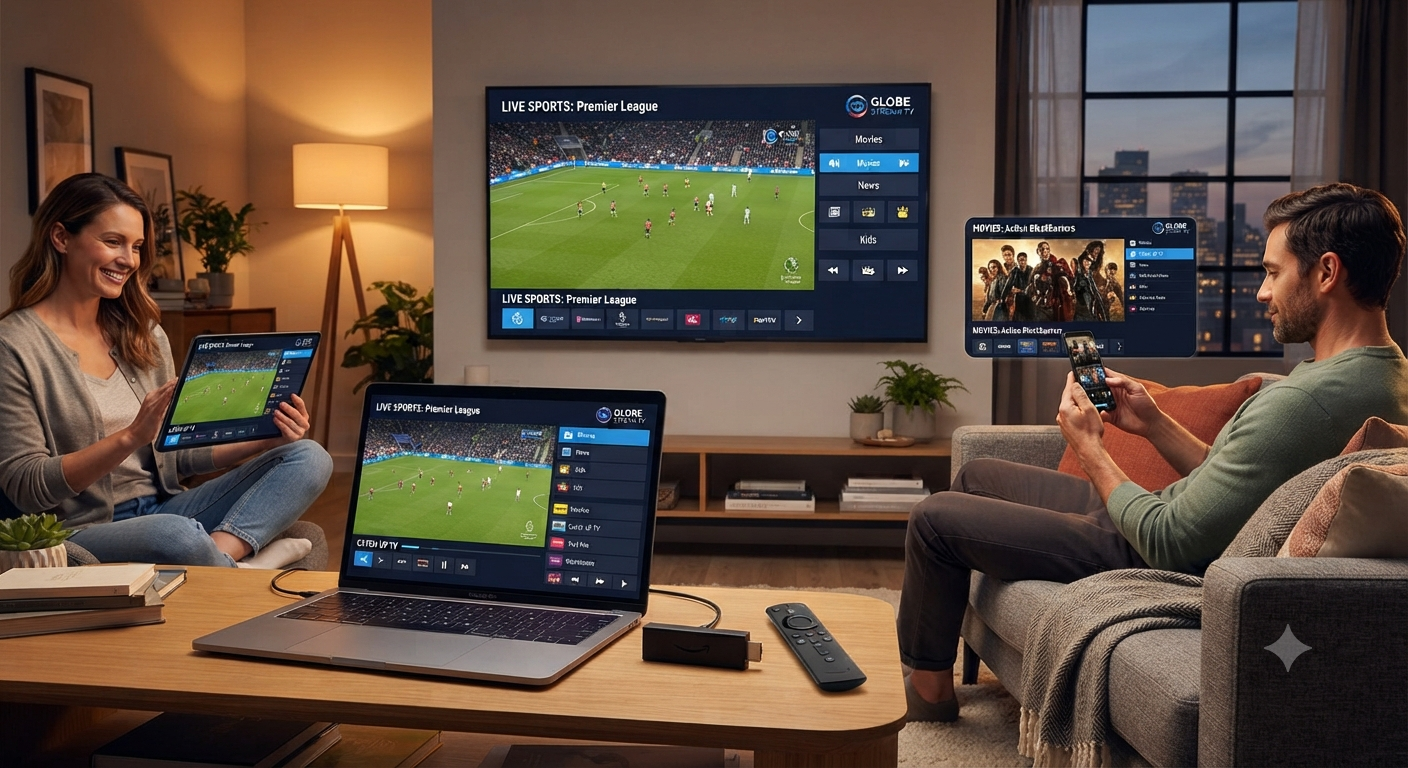
Multiple Devices
If you watch IPTV on several devices, check whether the subscription permits simultaneous connections.
Possible devices include:
Smart TVs
Fire TV devices
Android TV devices
Apple TV
Smartphones
Tablets
Windows PCs
Macs
Chromecast-compatible setups
Verify before publishing exact device compatibility for any particular provider.
Channels & Content
Content is often the most important part of an IPTV subscription.
Instead of choosing a service because it claims to have thousands of channels, make a checklist of what you actually want:
Local channels
International channels
News
Entertainment
Movies
Documentaries
Children's programming
Sports
Regional content
VOD
Availability can change by country and licensing arrangement, so channel lists should be checked directly with the provider.
Pricing
IPTV pricing varies considerably depending on the service, subscription period, features, and region.
Do not publish a specific provider's price unless you have verified it recently.
When comparing IPTV pricing, look beyond the advertised subscription cost. Check the monthly price, whether long-term plans actually offer a discount, and whether there are any setup or additional fees. If a free trial is available, review its duration and restrictions. You should also check whether the subscription automatically renews, what the refund eligibility and deadline are, and how cancellation works. Finally, confirm which payment methods are accepted before subscribing.
A low advertised price is not necessarily the best value if the service has poor transparency or does not meet your requirements.
Device Compatibility
A good IPTV service should fit your existing setup.
Before subscribing, confirm:
Your TV or streaming device is supported.
The required IPTV application is available.
Your operating system is supported.
Your subscription allows your intended number of connections.
Your network can handle the streams.
The provider gives clear setup instructions.
For business environments, also check whether commercial use is permitted under the provider's terms.
Internet Requirements
Internet speed is important for IPTV, but there is no universal speed guarantee.
As general planning figures:
SD streaming generally requires around 5 Mbps, while HD may need about 10 Mbps. For Full HD, plan for approximately 15–20 Mbps, and 4K/UHD streaming may require 30–50+ Mbps. These are planning figures, not guarantees, as actual requirements can vary depending on bitrate, compression, Wi-Fi quality, network congestion, device performance, and the streaming source.
These are planning figures, not guarantees. Actual requirements can vary according to bitrate, compression, Wi-Fi quality, network congestion, device performance, and the stream itself.
If several people use the same connection, allow additional bandwidth.
Performance & Buffering
Buffering does not automatically mean the IPTV provider is responsible. The problem can occur at several points in the connection.
Possible causes include:
Weak Wi-Fi
Network congestion
Slow internet
Router problems
Device limitations
High stream bitrate
Application problems
Provider-side issues
A useful troubleshooting approach is to change one variable at a time. For example, test the same stream over Ethernet instead of Wi-Fi before changing several settings simultaneously.
EPG & VOD
EPG
EPG means Electronic Program Guide. It provides program information such as titles, schedules, and upcoming programming.
A useful EPG can make live TV easier to navigate, but accuracy depends on the service and its data source.
VOD
VOD means Video on Demand. Instead of watching a live broadcast, you select available content to watch when you want.
When evaluating VOD, check:
Search functionality
Categories
Playback support
Content availability
Update frequency
Exact VOD libraries should be verified with the provider.
Sports
Sports viewers should pay particular attention to content rights and regional availability.
Do not assume that an IPTV service includes a particular league, tournament, event, or match simply because it advertises "sports."
Before subscribing, verify:
Whether your desired sports content is included
Whether availability differs by country
Whether specific events require another subscription
Whether the provider is authorized to distribute the content
Verify before publishing.
Pros & Cons
Pros
Internet-based television delivery
Can combine live TV and VOD
May work across multiple device categories
EPG can simplify channel navigation
Flexible viewing compared with some traditional setups
Potentially useful for international and regional content
Cons
Performance depends on the internet connection
Device and application compatibility varies
Content availability can change
Subscription terms differ between providers
Some services provide limited information about content rights
Buffering can have multiple causes
Is It Legal?
IPTV technology itself is not inherently illegal. The important question is whether the provider has the appropriate rights or authorization to distribute the content it offers.
Laws and licensing arrangements vary by country. A provider's claims should not automatically be treated as proof of authorization.
Before purchasing, look for:
Clear company information
Transparent terms and conditions
Content-rights information where applicable
Refund and cancellation policies
Privacy information
Legitimate payment and support channels
If a service makes questionable claims about copyrighted content or refuses to explain its rights, consider choosing a more transparent option.
Buying Guide
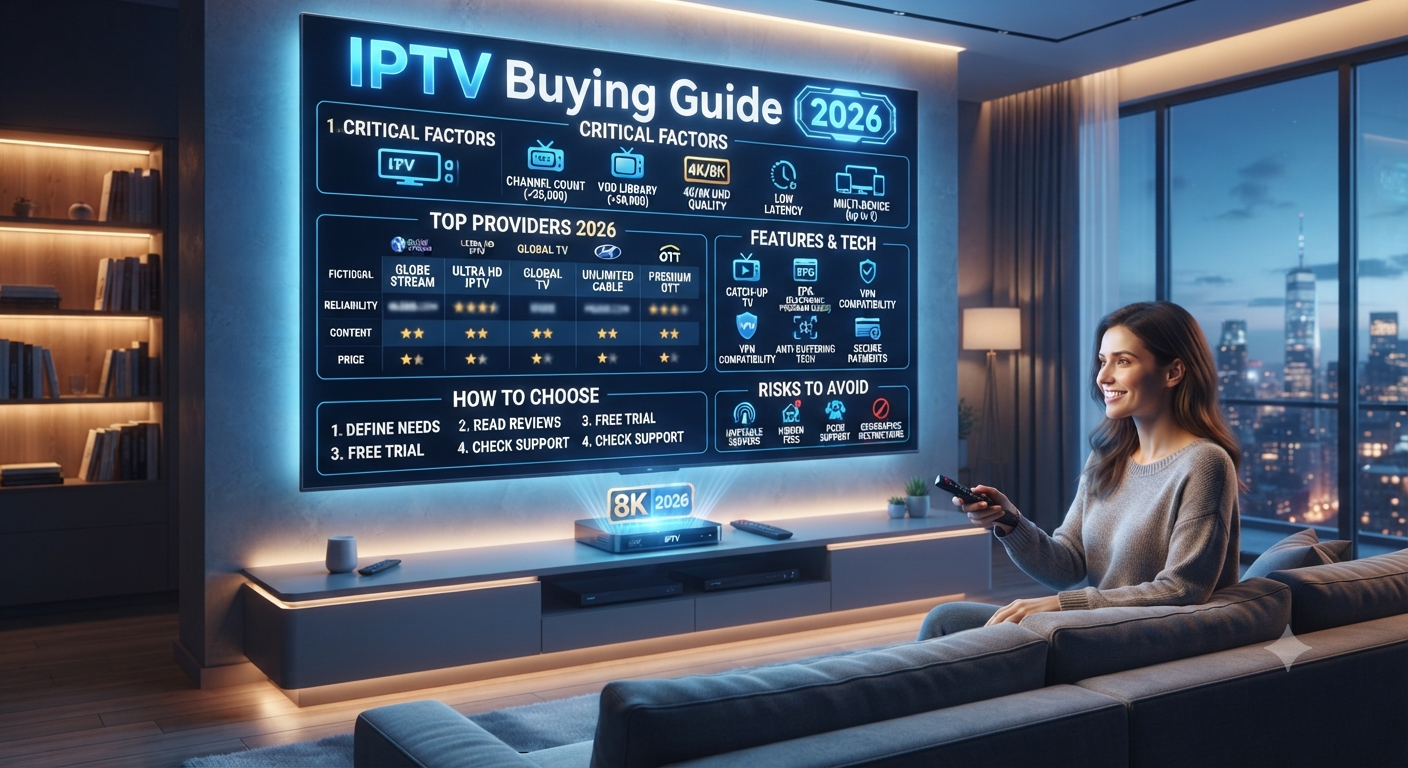
Use this simple framework when comparing IPTV providers.
1. Define Your Content Needs
Write down the channels, genres, sports, and VOD content you actually need.
2. Check Device Support
Make sure the service works with your television, streaming device, phone, tablet, or computer.
3. Review Stream Limits
If multiple people will watch simultaneously, confirm the number of permitted connections.
4. Examine Pricing
Look beyond the initial price. Check renewal costs, taxes, setup fees, and cancellation terms.
5. Check Quality
Look for information about HD, Full HD, and 4K availability, but avoid treating resolution labels as performance guarantees.
6. Evaluate Support
Check whether the provider offers clear setup documentation and a genuine support channel.
7. Consider Content Rights
Choose services that provide reasonable transparency about their content and authorization.
8. Read the Terms
Review refund, cancellation, renewal, privacy, and acceptable-use policies before payment.
Before You Buy
Use this checklist:
Does it offer the content I actually need?
Is my device supported?
Are simultaneous streams clearly explained?
Are pricing and renewal terms transparent?
Is there a clear cancellation policy?
Are refund conditions explained?
Is EPG available if I need it?
Is VOD available if I need it?
Does my internet connection meet the expected requirements?
Does the provider explain content rights?
Is customer support clearly identified?
Have I checked the provider's current information?
For any provider-specific claim that cannot be independently verified: Verify before publishing.
Who Is It Best For?
An IPTV service may be useful for:
Learners researching internet-based television technology
Freelancers who want flexible entertainment across supported devices
Startups and small business owners evaluating television solutions for appropriate environments
Viewers who prefer internet-based access to compatible live and on-demand content
Households with several supported streaming devices
For businesses, always check commercial-use terms rather than assuming a residential subscription can be used commercially.
Who Should Avoid It?
An IPTV subscription may not be suitable if:
Your internet connection is unreliable.
Your preferred device is unsupported.
You need guaranteed access to a specific channel or event.
You are uncomfortable with unclear subscription terms.
The provider cannot adequately explain its content rights.
You require a traditional broadcast or cable service instead.
Troubleshooting
IPTV Is Buffering
Try:
Test your internet speed.
Restart the router.
Move closer to the Wi-Fi router.
Try Ethernet if available.
Close bandwidth-heavy applications.
Test another channel.
Restart the IPTV application.
Change one variable at a time so you can identify the actual cause.
One Channel Does Not Work
If other channels work normally, the issue may be specific to that stream or content source. Check whether the provider has reported an outage or maintenance.
EPG Is Incorrect
EPG data can become outdated or mismatched. Refresh the guide or check whether the application provides an option to reload EPG data.
VOD Does Not Play
Check the internet connection, restart the application, and test another VOD item. If only one title fails, the issue may be specific to that content.
The App Crashes
Update the application if an update is available, restart the device, and check whether the device meets the application's requirements.
FAQs
What is the best IPTV service 2026?
There is no universally best service. The right choice depends on content, device compatibility, pricing, simultaneous streams, performance, support, and content rights.
Is IPTV better than cable?
It depends on your needs. IPTV can offer internet-based access and flexible device options, while traditional cable may provide a different delivery model and service structure.
What internet speed is needed for IPTV?
As a planning guide, SD may need around 5 Mbps, HD around 10 Mbps, Full HD around 15–20 Mbps, and 4K/UHD around 30–50+ Mbps. Actual requirements vary.
Can I watch IPTV on a Smart TV?
Many IPTV setups can work on supported Smart TVs, but compatibility depends on the operating system, application, and provider.
Can IPTV support multiple devices?
Some subscriptions permit multiple devices or simultaneous connections, while others restrict them. Always verify the provider's current terms.
Does IPTV include sports?
Some services may offer sports content, but availability and authorization vary. Never assume a particular league or event is included without verification.
What is EPG in IPTV?
EPG stands for Electronic Program Guide. It displays information about available and scheduled programming.
What is VOD in IPTV?
VOD stands for Video on Demand. It allows users to select available movies, programs, or other content rather than watching only a live stream.
How can I avoid IPTV buffering?
Use a stable internet connection, test Ethernet where possible, reduce network congestion, keep your application updated, and identify whether the issue affects one stream or the entire service.
Is every IPTV service legal?
No blanket statement can be made about every provider. IPTV is a technology, while the legality of a particular service depends largely on its content distribution rights and applicable laws.
Final Verdict
Choosing the best IPTV service 2026 is less about finding the provider with the biggest marketing claims and more about finding a service that fits your actual requirements.
Start with content, then check device compatibility, simultaneous streams, pricing, internet requirements, EPG, VOD, support, cancellation terms, and content rights. Avoid making a purchase based solely on channel counts, claimed uptime, "4K" labels, or promotional testimonials.
For a reliable comparison, verify provider-specific information immediately before publication or purchase because pricing, features, availability, and terms can change.
Author Bio
About the Author:
The author focuses on SEO-driven, human-first technology and IPTV content, with an emphasis on clear explanations, practical buying guidance, E-E-A-T principles, and careful handling of provider-specific claims. Content is written to help readers understand IPTV technology and make informed decisions without relying on unsupported marketing claims.




Write a comment ...